Future Continuous Tense in Hindi-भविष्य में किसी समय पर कोई क्रिया जारी रहेगी यह व्यक्त करने के लिए इस Tense का प्रयोग होता है।
आज की इस Post में Future Continuous Tense की पूरी जानकारी विस्तारपूर्वक दी गई है जैसे कि इस Tense का प्रयोग कब किया जाता है, इसकी पहचान क्या है, और इस Tense को प्रयोग करने के कौन-कौन से Rule और Structure हैं और साथ ही साथ हर Type ( Affirmative, Negative, Interrogative, WH Question Sentences) के ढ़ेर सारे Examples और Exercises भी दी गई हैं ताकि आपको समझने में आसानी हो और आपके सारे Doubt अच्छे से clear हो सके।
Future Continuous Tense- इस Tense को Future Progressive Tense के नाम से भी जाना जाता है। इस Tense का प्रयोग उन कार्यों या घटनाओं को व्यक्त करने के लिए किया जाता है जो भविष्य में जारी रहेंगे या हो रहे होंगे परन्तु इसमें यह नहीं बताया जाता कि कोई काम कब से या कितनी देर से चल रहा होगा यानि काम के जारी रहने का समय नहीं दिया जाता है इसीलिए इसे हिंदी में ‘अपूर्ण भविष्यकाल’ या ‘निरंतर भविष्यकाल’ कहा जाता है। जैसे-
कल हम लोग जा रहे होंगे।
We will be going tomorrow.
कल दोपहर मैं टीवी देख रहा होऊंगा।
I will be watching TV tomorrow in the afternoon.
2 घंटे बाद वह पार्क में घूम रहा होगा।
He will be walking in the park after 2 hours.
आधे घंटे बाद, वह चाय पी रही होगी।
After half an hour, she will be taking tea.

Future Continuous Tense की पहचान-
Future Continuous Tense के हिंदी वाक्यों की क्रियाओं के अंत में रहा होगा, रही होगी, रहे होंगे, रहा होऊंगा इत्यादि शब्द आते हैं।
Examples-
आधे घंटे बाद, मैं नहा रहा होऊंगा।
I will be taking a bath after half an hour.
कल शाम को वह खाना पका रहा होगा।
He will be cooking food tomorrow evening.
हम कल सुबह प्रतियोगिता की तैयारी कर रहे होंगे।
We will be preparing for the competition tomorrow morning.
Future Continuous Tense में प्रयोग की जाने वाली Main verb तथा Helping verb-
Main Verb (मुख्य क्रिया)
Future Continuous Tense की मुख्य क्रिया verb की 1st form+ing (V1+ing) होती है। इसे verb की fourth form यानि V4 भी कहा जाता है।
Helping Verb (सहायक क्रिया)
Future Continuous Tense की सहायक क्रिया
के रूप में will be का प्रयोग किया जाता है।
Note: 1. इस प्रकार के वाक्यों में समय सूचक शब्दों का प्रयोग भी किया जाता है जो कि अत्यंत ही आवश्यक होता है। जब वाक्य single Sentences type का हो। जैसे-
कल शाम को वे लोग आ रहे होंगे।
They will be coming tomorrow evening.
आधे घंटे बाद मैं चाय पी रहा होऊंगा।
I will be taking tea after half an hour.
2. जब वाक्य Double Sentences type का हो तो फिर समयसूचक शब्दों का प्रयोग ज़रूरी नहीं हैं। जैसे-
जब आप घर जाओगे तब आपका बेटा खेल रहा होगा।
When you go home, your son will be playing.
जब वे लोग आएंगे तब मैं खाना पका रहा होऊंगा।
When they come, I will be cooking food.
जब तुम घर आओगे, वह सो रही होगी।
When you come home, she will be sleeping.
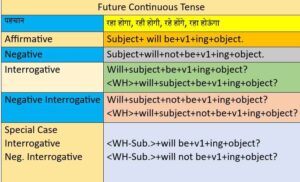
Structures of Sentences in Future Continuous Tense :
1. Affirmative/Positive sentences of Future Continuous Tense in Hindi (सकारात्मक वाक्य)
Structure: Subject+ will be+ verb 1+ing+ object+ other words.
Examples-
वे शाम को क्रिकेट खेल रहे होंगे।
They will be playing cricket in the evening.
कल हम आपके साथ जा रहे होंगे।
We will be going with you tomorrow.
वह शाम को कपड़े धो रही होगी।
She will be washing the clothes in the evening.
आधे घंटे बाद, वह बस स्टॉप पर मेरा इंतजार कर रही होगी।
She will be waiting for me at bus stop after half an hour.
कल शाम को 6 बजे वह नाच रहा होगा।
He will be dancing at 6 pm tomorrow.
कल सुबह 10 बजे मैं चाय पी रहा होऊंगा।
I will be taking tea tomorrow at 10 o’clock.
दो घंटे बाद तुम कार चला रहे होंगे।
You will be driving a car after two hours.
रात 12 बजे वह सो रहा होगा।
At 12 midnight, he will be sleeping.
4 बजे वह अपने मित्रों के साथ खेल रहा होगा।
He will be playing with his friends at 4 pm.
2 बजे वह अपना लंच कर रहा होगा।
He will be having his lunch at 2 pm.
शाम पांच बजे मैं अपनी ट्यूशन क्लास के लिए तैयार हो रहा होऊंगा।
I will be getting ready for my tuition class at 5 pm.
कल मैं अपने आईपैड पर टीवी शो देख रहा होऊंगा।
Tomorrow, I will be watching a TV show on my iPad.
मैं शाम 6 बजे आॉफिस से निकल रहा होऊंगा।
I will be leaving the office at 6 pm.
मैं सुबह 9 बजे आॉफिस के लिए निकल रहा होऊंगा।
I will be leaving for office at 9 am.
Note- जब हम किसी जगह से निकलते है तो इस दशा में leave के बाद कोई भी Preposition नहीं आती।
एक घंटे बाद, मैं तुम्हारे यहां आ रहा होऊंगा।
After an hour, I will be coming to you.
दो घंटे बाद,उसे बहुत पसीना आ रहा होगा।
He will be sweating profusely after two hours.
शाम को बच्चे शोर कर रहे होंगे।
The children will be making a noise in the evening.
Note- समय बताने का सिर्फ एक ही तरीका नहीं होता कि जब आपने केवल Time बता दिया जैसे- इस हफ्ते, कल सुबह, शाम को, अगले महीने आदि। Time बताने का एक तरीका यह भी है कि जब कोई और काम होगा। जैसे-
जब मैं घर पहुंचूंगा, मेरा बेटा सो रहा होगा।
When I reach home, my son will be sleeping.
जब मैं बाज़ार जाऊंगा, मेरा दोस्त वहीं पर सब्जी खरीद रहा होगा।
When I go to market, my friend will be purchasing vegetables over there.
जब तुम मेरे घर आओगी, मैं खाना पका रहा होऊंगा।
When you come to my home, I will be cooking food.
Common Time Expressions:
next time, in the future, next month, at this time tomorrow, at this moment, next year, at 6 pm tomorrow etc.
Important Note- 1.अगर बात भविष्य के बजाय वर्तमान समय में हो रहे किसी कार्य की हो रही है यानि जब हम वर्तमान समय में होने वाले किसी कार्य के बारे में कोई अंदाजा लगाते है तो उस दशा में will be के स्थान पर would be का प्रयोग किया जाता है भले ही sentence में रहा होगा, रहे होंगे आदि शब्दों का प्रयोग किया जा रहा हो। Will be का प्रयोग तब किया जब बात future time की हो रही हो कि भविष्य में ऐसा किसी समय पर हो रहा होगा। जैसे-
इस वक्त मेरा बेटा खेल रहा होगा।
My son would be playing at this time.
मेरी मम्मी इस वक्त खाना पका रही होगी।
My mother would be cooking food right now.
इस वक्त वह कपड़े धो रहा होगा।
He would be washing clothes right now.
जल्दी जाओ, बस निकल रही होगी।
Hurry up, the bus would be leaving.
2.अगर बात पक्के तौर पर होने वाले किसी कार्य की हो तो must be का प्रयोग कर लिया जाता है। इसी प्रकार अगर किसी वाक्य में ‘शायद’ शब्द का प्रयोग हो तो उसके लिए may be या might be का प्रयोग किया जाता है। जैसे-
मेरा बेटा पक्का इस वक्त पार्क में खेल रहा होगा।
My son must be playing in the park right now.
वह शायद चाय बना रहा होगा।
He may be making tea./ He might be making tea.
शायद इस वक्त वह मेरे बारे में सोच रही होगी।
She might be thinking about me at this time.
वह जरूर इस वक्त खाना पका रही होगी।
She must be cooking food at this time.
(जब किसी कार्य के होने की संभावना ज्यादा होती है(about 50%) तो हम may का प्रयोग करते है और जब संभावना कम होती है (about 20-30% तो might का प्रयोग किया जाता है।)
3. अगर सामने वाले को समय पता है कि आप कब की बात कर रहे हैं या उसने समय लगा कर पूछा है तो आप बिना Time mention किये उस बात का जवाब दे सकते है। जैसे-
A: तुम्हारा भाई शाम को क्या कर रहा होगा?
What will your brother be doing in the evening?
B:वह खेल रहा होगा।
He will be playing.
वह एक लेख लिख रहा होगा।
He will be writing an article.
Negative Sentences of Future Continuous Tense in Hindi ( नकारात्मक वाक्य)
Structure: Subject+ will + not+ be+ verb 1+ing+ object+ other words.
Examples-
वे शाम को क्रिकेट नहीं खेल रहे होंगे।
They will not be playing cricket in the evening.
कल हम आपके साथ नहीं जा रहे होंगे।
We will not be going with you tomorrow.
वह शाम को कपड़े नहीं धो रही होगी।
She will not be washing the clothes in the evening.
आधे घंटे बाद, वह बस स्टॉप पर मेरा इंतजार नहीं कर रही होगी।
She will not be waiting for me at bus stop after half an hour.
कल शाम को 6 बजे वह नहीं नाच रहा होगा।
He will not be dancing at 6 pm tomorrow.
कल सुबह 10 बजे मैं चाय नहीं पी रहा होऊंगा।
I will not be taking tea tomorrow at 10 o’clock.
दो घंटे बाद तुम कार नहीं चला रहे होंगे।
You will not be driving a car after two hours.
रात 12 बजे वह सो नहीं रहा होगा।
At 12 midnight, he will not be sleeping.
4 बजे वह अपने मित्रों के साथ नहीं खेल रहा होगा।
He will not be playing with his friends at 4 pm.
2 बजे वह अपना लंच नहीं कर रहा होगा।
He will not be having his lunch at 2 pm.
शाम पांच बजे मैं अपनी ट्यूशन क्लास के लिए तैयार नहीं हो रहा होऊंगा।
I will not be getting ready for my tuition class at 5 pm.
कल मैं अपने आईपैड पर टीवी शो नहीं देख रहा होऊंगा।
Tomorrow, I will not be watching a TV show on my iPad.
मैं शाम 6 बजे आॉफिस से नहीं निकल रहा होऊंगा।
I will not be leaving the office at 6 pm.
मैं सुबह 9 बजे आॉफिस के लिए नहीं निकल रहा होऊंगा।
I will not be leaving for office at 9 am.
शाम को बच्चे शोर नहीं कर रहे होंगे।
The children will not be making a noise in the evening.
Interrogative Sentences of Future Continuous Tense in Hindi
Interrogative sentences दो तरह के होते हैं-
Yes-No type questions
Wh-words type interrogative sentences
1. Yes-No type questions- ये वो questions होते हैं जिनका जवाब हां या ना में दिया जा सकता हैं। इनकी शुरुआत helping verb से होती हैं।
Structure- Will+ subject+ be+ verb 1+ ing+ object+ other words?
क्या वे शाम को क्रिकेट खेल रहे होंगे?
Will they be playing cricket in the evening?
क्या कल हम आपके साथ जा रहे होंगे?
Will we be going with you tomorrow?
क्या वह शाम को कपड़े धो रही होगी?
Will she be washing the clothes in the evening?
क्या आधे घंटे बाद वह बस स्टॉप पर मेरा इंतजार कर रही होगी?
Will she be waiting for me at the bus stop after half an hour?
क्या कल शाम 6 बजे वह नाच हा होगा?
Will he be dancing at 6 pm tomorrow?
क्या कल 10 बजे मैं चाय पी रहा होऊंगा?
Will I be having tea tomorrow at 10 o’clock?
क्या 4 बजे वह अपने मित्रों के साथ खेल रहा होगा?
Will he be playing with his friends at 4 o’clock?
क्या 2 बजे वह अपना लंच कर रहा होगा?
Will he be having his lunch at 2 pm?
क्या दो घंटे बाद तुम कार चला रहे होंगे?
Will you be driving a car after two hours?
क्या तुम कल इस समय पुस्तक पढ़ रहे होगे?
Will you be reading the book tomorrow at this time?
Wh-words type interrogative sentences of Future Continuous Tense in Hindi
जिन वाक्यों की शुरुआत helping verb से ना होकर wh family word से होती है, वो wh-words type interrogative sentences कहलाते हैं।
Structure- Wh-word+ will+subject+be+verb1+ing+object+other words?
Examples-
तुम कल शाम को क्या कर रहे होंगे?
What will you be doing tomorrow evening?
वह रात को कपड़े क्यों धो रहा होगा?
Why will he be washing the clothes at night?
तुम कल क्रिकेट कहां खेल रहे होगे?
Where will you be playing cricket tomorrow?
अंकिता अपने गांव से कब लौट रही होगी?
When will Ankita be returning from her village?
आप कल दोपहर मेरा इंतजार क्यों कर रहे होंगे?
Why will you be waiting for me tomorrow afternoon?
अगले सप्ताह वह किसके साथ बाजार जा रही होगी?
With whom will she be going to market next week?
अगली बार शुभम किसकी कार चला रहा होगा?
Whose car will Shubham be driving next time?
कल इसी समय सौरभ अपने पापा को पत्र क्यों लिख रहा होगा?
Why will Saurabh be writing a letter to his father at this time tomorrow?
उस समय बिल्ली चूहे के पीछे कहां दौड़ रही होगी?
Where will the cat be running after the mouse at that time?
वह कमरे में इस समय किसके साथ पढ़ रहा होगा?
With whom would he be studying in the room right now?
Note: WH family member में What, When, Why, Who, Where, How, Whom, Whose आदि को शामिल करते हैं।
Negative Interrogative Sentences of Future Continuous Tense in Hindi
ये भी दो प्रकार के होते हैं-
1. Yes-No Type Negative Questions
इन वाक्यों में first helping verb वाक्य के शुरू में आती है और ‘not’ subject के बाद।
Structure: Will+ subject+ not+be+ Verb 1+ing+object+other words?
क्या यह दुकानदार कल अपना सामान नहीं बेच रहा होगा?
Will this shopkeeper not be selling his goods tomorrow?
क्या तुम भविष्य में अच्छा जीवन व्यतीत नहीं कर रहे होंगे?
Will you not be leading a good life in the future?
क्या मैं कल इस वक्त यह किताब नहीं पढ़ रहा होऊंगा?
Will I not be reading this book at this time tomorrow?
क्या कल सुबह मेरे पिताजी अखबार नहीं पढ़ रहे होंगे?
Will my father not be reading the newspaper tomorrow morning?
क्या अगले साल लोग कुएं से पानी नहीं निकाल रहे होंगे?
Will the people not be drawing water from the well next year?
क्या शाम को यात्री बस का इंतजार नहीं कर रहे होंगे?
Will the passengers not be waiting for the bus in the evening?
क्या वह भविष्य में तुम्हें परेशान नहीं कर रहा होगा?
Will he not be troubling you in the future?
क्या कल तुम्हारे माता-पिता प्रधानाचार्य से मिलने नहीं आ रहे होंगे?
Will your parents not be coming to meet the Principal tomorrow?
क्या इस समय मेरी बहन कमरे में नहीं सो रही होगी?
Would my sister not be sleeping in the room at this moment?
क्या ये लड़के कल इसी समय मैदान में हॉकी नहीं खेल रहे होंगे?
Will these boys not be playing hockey in the field at this time tomorrow?
क्या किसान अगले महीने खेत नहीं जोत रहे होंगे?
Will the farmers not be plowing the fields next month?
2.Wh-word Type Negative Questions of Future Continuous Tense in Hindi
इन वाक्यों की शुरुआत helping verb से नहीं बल्कि WH family word से होती है तथा subject के बाद ‘not’ का प्रयोग किया जाता है।
Structure: Wh-word+ will+subject+not+be+verb1+ing+object+other words?
Examples-
वह रात को कपड़े क्यों नहीं धो रहा होगा?
Why will he not be washing the clothes at night?
आप कल दोपहर मेरा इंतजार क्यों नहीं कर रहे होंगे?
Why will you not be waiting for me tomorrow afternoon?
वह इस समय मेरी तरफ क्यों नहीं देख रहा होगा?
Why would he not be looking at me right now?
तुम उसे अगले महीने क्यों नहीं पढ़ा रहे होंगे?
Why will you not be teaching him next month?
वह 2 बजे पुस्तक क्यों नहीं पढ़ रहा होगा?
Why will he not be reading the book at 2 o’clock?
वे शाम को घर पर पढ़ाई क्यों नहीं कर रहे होंगे?
Why will they not be studying at home in the evening?
आप अगले साल गरीबों की मदद क्यों नहीं कर रहे होंगे?
Why will you not helping the poor next year?
वे लोग इस समय अपना काम क्यों नहीं कर रहे होंगे?
Why would they not be doing their work at this moment?
लड़के कल सुबह मैच क्यों नहीं खेल रहे होंगे?
Why will the boys not be playing the match tomorrow morning?
वे कल बच्चों को मिठाईयां क्यों नहीं बांट रहे होंगे?
Why will they not be distributing the sweets to the children tomorrow?
आधे घंटे बाद यह लड़का प्रश्नों के उत्तर क्यों नहीं दे रहा होगा?
Why will this boy not answering the questions after half an hour?
वह इस समय सच क्यों नहीं बोल रहा होगा?
Why would he not be speaking the truth right now?
Special Case- जब वाक्य में subject के बारे में ही पूछा जाता है यानि जब wh family member, subject को ही refer करें तो उस दशा में sentence structure affirmative sentence की ही तरह होता है।
Structure-
Interrogative: <WH-sub.>+will+ verb 1 +ing+ object+ other words?
Neg. Interrogative : <WH-sub.>+will+ not+be+ verb 1+ing+ object+ other words?
Examples:
शाम को कौन गाना गा रहा होगा?
Who will be singing a song in the evening?
रात को तुम्हें कौन पढ़ा रहा होगा?
Who will be teaching you at night?
झूठ कौन बोल रहा होगा?
Who would be telling a lie?
कौन सा लड़का कल सुबह दौड़ में भाग नहीं ले रहा होगा?
Which boy will not be participating in the race tomorrow morning?
किसकी बहन 4 बजे वहां आ रही होगी?
Whose sister will be coming there at 4 o’clock?
शाम को पौधों में पानी कौन दे रहा होगा?
Who will be watering the plants in the evening?
अगले साल इस कंपनी को कौन चला रहा होगा?
Who will be running this company next year?
दरवाज़ा कौन नहीं खटखटा रहा होगा?
Who will not be knocking at the door?
कितनी लड़कियां मैदान में खेल रही होंगी?
How many girls will be playing in the field?
कमरे में कितने लड़के सो रहे होंगे?
How many boys will be sleeping in the room?
Future Continuous Tense In Hindi
Main Verb में ‘ing’ जोड़ने के नियम-
1. यदि किसी verb का अंतिम letter ‘e’ है तो उनमें ‘ing’ लगाते समय ‘e’ को हटा दिया जाता है। जैसे-
Come+ ing=coming, take+ing=taking, give+ing=giving
Write+ing=writing, make+ing=making, live+ing=living
Love+ing=loving, save+ing=saving
2.जिन verbs के अंत में कोई व्यंजन (consonant) हो और उससे पहले कोई एक ही स्वर (vowel- a,e,i,o,u) आये तो आखिरी letter को double करके उसमें ‘ing’ जोड़ते है। जैसे-
Sit+ing=sitting, cut+ing=cutting, begin+ing=beginning,
Put+ing=putting, run+ing=running, hit+ing=hitting
3. जिन verbs के अंत में कोई consonant हो और उससे पहले दो vowels हो तो ‘ing’ लगाते समय अंतिम consonant double नहीं होता है। जैसे-
Read+ing=reading, weep+ing=weeping, meet+ing=meeting,
Sleep+ing=sleeping, beat+ing=beating, wait+ing=waiting,
Keep+ing=keeping, hear+ing=hearing, bear+ing=bearing
4. यदि किसी verb के अंत में ‘ie’ जुड़ा हो तो ‘ie’ की जगह y लगाकर ‘ing’ जोड़ देते है। जैसे-
Lie+ing=lying, tie+ing=tying, die+ingdying, vie+ing=vying
5. यदि verb के अंत में ee आये तो उसमें ‘e’ नहीं हटाते है और उसी में ‘ing’ जोड़ देते है।
See+ing=seeing, agree+ing=agreeing, flee+ing=fleeing
Wee+ing=weeing
मूल रूप से, Future Progressive Tense का निर्माण Base Verb में ‘ing’ जोड़ कर किया जाता है।
(Basically, the Future Progressive Tense is formed by adding -ing to the base verb.)
इस Tense की सहायक क्रिया (H.V.) will be होती है।
Important Rule- English के कुछ ऐसे verbs होते है जिनका प्रयोग Future Continuous Tense में नहीं होता है। जैसे- smell, hear, like etc. इन्हें static verbs कहा जाता है। इन verbs में ‘ing’ का use ( as a main verb) बिल्कुल भी नहीं किया जा सकता।
Static Verbs
We don’t normally use the continuous with stative verbs. Stative verbs include:
1. Verbs of thinking and feeling-
Believe, love, recognise, understand, dislike, hate, remember, want, know, prefer, suppose, wish, like, realise, think
2. Verbs of the senses-
appear, look, smell, taste, feel, seem, sound
3. Others-
agree, belong, need, own, disagree, owe, possess
ऊपर दिए गए verbs का प्रयोग Simple Future Tense में होता है। विशेष अर्थ में इनमें से कुछ verbs का प्रयोग future continuous tense में होता है।
(You can use them in the future continuous tense if the meaning is different and the context is different.)
We will be seeing with our eyes.( Incorrect)
We will see with our eyes.( Correct)
( हम अपनी आंखों से देख रहे हैं)
The water will be feeling cold. ( Incorrect)
The water will feel cold.( Correct)
( पानी ठंडा लग रहा है।)
हम जानते हैं कि ‘see’ का प्रयोग ‘देखना’ के अर्थ में किया जाता है; इस अर्थ में इसका प्रयोग Present Continuous Tense में नहीं किया जा सकता। लेकिन जब ‘see’ का प्रयोग ‘मिलना’ के अर्थ में किया जा रहा हो तो इसका प्रयोग Present Continuous Tense में किया जा सकता है। जैसे-
वह मुझसे आज मिल रहा है।
He is seeing me today.
उसके पिताजी मेरे पिताजी से कल मिल रहे है।
His father is seeing my father tomorrow.
लेकिन जब Hear का प्रयोग ‘सुनवाई करना’ के अर्थ में किया जाता है तब इसका प्रयोग Future Continuous Tense में किया जा सकता है।
जैसे- वह मुकद्दमे की सुनवाई कर रहा है।
He will be hearing the case tomorrow.
Contraction with Future Continuous Tense in Hindi
जब हम Future Continuous Tense का प्रयोग speaking में करते हैं तब हम अक्सर subject तथा will को contract करके बोलते हैं। कभी-कभी, अनौपचारिक लेखन में भी हम short form का प्रयोग करते हैं।
When we use the Future Continuous Tense in speaking, we often contract the subject and will. Sometimes, we also do it in informal writing.
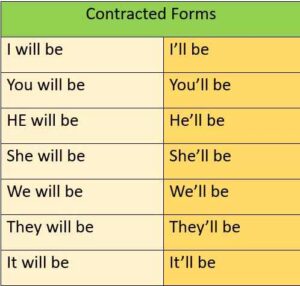
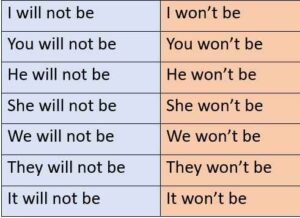
In negative sentences, we may contract with won’t, like this:
Uses of Future Continuous Tense in Hindi
The Future Continuous Tense is used:
1. To denote an action that will be going on or continuing at some point of time in the future.
भविष्य में किसी समय पर कोई काम हो रहा होगा।
( कुछ समय तक continue रहेगा।)
Examples-
वह अगले सप्ताह हमसे मिलने आ रहा होगा।
He will be coming to visit us next week.
हम इस सोमवार उस बाज़ार में खरीददारी कर रहे होंगे।
We will be shopping in that market this Monday.
मैं कल शाम पांच बजे टीवी देख रहा होऊंगा।
I will be watching TV at 5 pm tomorrow.
2. To describe a longer ongoing future action interrupted by another shorter future action
(एक काम को दूसरा काम interrupt करेगा।)
Long Action→Future Progressive + Short Action→Present Indefinite
Examples-
जब तुम आओगे, मैं खाना बना रही हूंगी।
I will be cooking when you arrive.
जब तुम कल आओगे, वे टेनिस खेल रहे होंगे।
When you come tomorrow, they will be playing tennis.
जब आप घर पहुंचोगे, साहिल पढ़ाई कर रहा होगा।
Sohan will be studying when you reach home.
जब मूवी शुरू होगी, हम रात का खाना खा रहे होंगे।
We’ll be having dinner when the movie starts.
3. To express parallel actions or series of parallel actions in the future.
(जब दो या दो से ज्यादा काम एक ही समय पर हो रहे होंगे।)
Examples-
वह टीवी देख रही होगी और मैं खाना पका रही हूंगी।
She will be watching TV and I will be cooking dinner.
आज रात, वे पार्टी कर रहे होंगे; संगीत पर नृत्य कर रहे होंगे और अच्छा समय बिता रहे होंगे।
Tonight, they will be having a party, dancing to music and having a good time.
कल सुबह, मैं सो रहा होऊंगा और वह कुत्ते को घुमा रही होगी।
Tomorrow morning, I will be sleeping and she will be walking the dog.
4. To ask a question politely about the future
(भविष्य के बारे में शिष्टतापूर्वक प्रश्न पूछने के लिए)
Examples-
क्या आज रात पार्टी में आप अपने दोस्त को लाएंगे?
Will you bring your friend to the party tonight?
Alternative: Will you be bringing your friend to the party tonight?
आप बिल का भुगतान कैसे करेंगे, सर?
How will you pay the bill, sir?
Alternative: How will you be paying the bill,sir?
क्या रोहन हमारे साथ आयेगा?
Will Rohan come with us?
Alternative: Will Rohan be coming with us?
क्या आप हमारे लिए खाना बनाओगे?
Will you cook for us?
Will you be cooking for us?
5. To refer to actions that are happening now and expected to continue sometime in the future
(उन कार्यों का उल्लेख करने के लिए जो अभी हो रहे हैं और भविष्य में कुछ समय तक जारी रहने की उम्मीद है।)
Examples-
दुर्भाग्य से, समुद्र का स्तर अगले 20 सालों में भी बढ़ता रहेगा।
Unfortunately, sea level will still be rising in next 20 years.
अभी मैं ट्रांसलेशन पर एक किताब लिख रहा हूं और मैं रात को भी इस पर काम कर रहा हूंगा।
I am writing a book on translation, and I will still be working on it tonight.
जब तुम वापस आओगे, मैं तब भी तुम्हारा इन्तज़ार कर रहा हूंगा।( यानि मैं अब भी तुम्हारा इन्तज़ार कर रहा हूं।)
I will still be waiting for you when you come back.
6. To talk about events you expect to take place in the future
(उन घटनाओं के बारे में बात करने के लिए जिनकी आपको भविष्य में घटित होने की आशा है।)
Examples-
लोग जल्दी ही एक सामान्य जीवन जी रहे होंगे।
People will be living a normal life soon.
अगले साल मैं इस कंपनी को चला रहा होऊंगा।
I will be running this company next year.
7. To make predictions in the future
(भविष्य में भविष्यवाणियां करने के लिए)
Examples-
संगीत समारोह के अंत में लोग तुम पर टमाटर फेंक रहे होंगे।
At the end of the concert, the people will be throwing tomatoes at you.
शाम 8 बजे के बाद , वह हमारा कॉल नहीं उठाएगा।
He won’t be picking up our calls after 8 pm.
कल शाम, वह मुम्बई जाने के लिए तैयार हो रहा होगा।
He will be getting ready for going to Mumbai tomorrow evening.
8. To denote a definite action in the future
(भविष्य में एक निश्चित कारवाई को बताने के लिए)
Examples-
समिति/परिषद अगले सप्ताह नतीजे घोषित कर रही होगी।
The Council will be declaring the results next week.
मेरी मां कल अपना ऑफिस जॉइन कर रही होगी।
My mother will be joining her office tomorrow.
Future Continuous Tense Exercises
Translate the following sentences into English:
Exercise 1
(Affirmative Sentences of Future Continuous tense in Hindi)
1. बच्चे नदी में तैर रहे होंगे।
2. हम भाषण सुन रहे होंगे।
3. भिखारी भीख मांग रहा होगा।
4. वे कल शाम पार्क में खेल रहे होंगे।
5. जब आप मेरे घर आएंगे तो मैं खाना बना रहा होऊंगा।
6. दो घंटे बाद मैं पार्क में टहल रहा होऊंगा।
7. कल इस काम को करने में मैं उसकी मदद कर रहा होऊंगा।
8. मैं कल सुबह 10 बजे टेनिस खेल रहा होऊंगा।
9. अभिमन्यु 2 बजे लाइब्रेरी जा रहा होगा।
10. भविष्य में, मैं लाखों कमा रहा होऊंगा।
11. अगले साल इसी समय, मैं अपने मित्रों के साथ पार्टी कर रहा होऊंगा।
12. अगले सप्ताह, मैं एक नाटक देखने जा रहा होऊंगा।
Answers-
1. The children will be swimming in the river.
2. We will be listening to the speech.
3. The beggar will be begging.
4. They will be playing in the park tomorrow evening.
5. I will be cooking food when you come to my house.
6. I will be walking in the park after two hours.
7. I will be helping him to do this task tomorrow.
8. I will be playing tennis at 10 am tomorrow.
9. Abhimanyu will be going to the library at 2 o’clock.
10. In the future, I will be earning millions of dollars.
11. At this moment next year, I will be partying with my friends.
12. Next week, I will be going to watch a play.
Exercise 2
(Negative Sentences of Future Continuous tense in Hindi)
1. दो घंटे बाद आप चाय नहीं पी रहे होंगे।
2. वे लड़कों को पढ़ा नहीं रहे होंगे।
3. कुत्ता भौंक नहीं रहा होगा।
4. वह इस वक्त पढ़ नहीं रहा होगा।
5. वे आज रात हमारे साथ भोजन नहीं कर रहे होंगे।
6. मैं पार्टी में नहीं जा रहा होऊंगा।
7.हम मुम्बई नहीं जा रहे होंगे।
8. हवा में बादल नहीं तैर रहे होंगे।
9. वे कल सुबह क्रिकेट नहीं खेल रहे होंगे।
10. वह 5 बजे नदी में नहीं तैर रहा होगा?
Answers-
1. You will not be taking tea after two hours.
2. They will not be teaching the boys.
3. The dog will not be barking.
4. He would not be studying right now.
5. They will not be dining with us tonight.
6. I will not be going to the party.
7. We will not be moving to Mumbai.
8. The clouds will not be floating in the air.
9. They will not be playing cricket tomorrow morning.
10. He will not be swimming in the river at 5 o’clock.
Exercise 3
(Interrogative Sentences of Future Continuous Tense in Hindi)
(जब वाक्य के शुरू में ‘क्या’ हो)
1. क्या फेरीवाले कल फल नहीं बेच रहे होंगे?
2. क्या आप आधे घंटे बाद मोबाइल पर बात कर रहे होंगे
3. क्या रात को कुत्ते भौंक रहे होंगे?
4. क्या ये लड़कियां 7 बजे अपना होमवर्क कर रही होंगी?
5. क्या पापा इस समय मेरे लिए खिलौने खरीद रहे होंगे?
6. क्या 15 मिनट के बाद तुम नहा रहे होंगे?
7. क्या आप रविवार को चिड़ियाघर जा रहे होंगे?
8. क्या वे दोपहर में पतंग उड़ा रहे होंगे?
9. क्या कबाड़ी पुराना सामान खरीद रहा होगा?
10. क्या वह आज रात पार्टी में हमारे साथ शामिल होगा?
11. क्या वहां इस समय बरसात हो रही होगी?
12. क्या उन दोनों भाइयों में झगड़ा हो रहा होगा?
Answers-
1. Will the hawkers not be selling fruits tomorrow?
2. Will you be talking on the mobile after half an hour?
3. Will the dogs be barking at night?
4. Will these girls be doing their homework at 7 o’clock?
5. Would Papa be buying toys for me at this moment?
6. Will you be taking a bath after 15 minutes?
7. Will you be going to the zoo on Sunday?
8. Will they be flying kites in the afternoon?
9. Will the junk dealer be purchasing old goods?
10. Will he be joining us for the party tonight?
11. Would it be raining there at this time?
12. Will those two brothers be quarreling?
Exercise 4
(Interrogative Sentences of Future Continuous Tense in Hindi)
(जब वाक्य के बीच में wh-word हो)
1. वह इस समय वहां क्या कर रहा होगा?
2. बच्चे इस समय कौन सी फिल्म देख रहे होंगे?
3. तुम्हारा भाई वहां क्या कर रहा होगा?
4. वह उससे बात क्यों नहीं कर रही होगी?
5. आराध्या बाज़ार से क्या खरीद रही होगी?
6. वे दोनों लड़कियां इस समय कहां जा रही होंगी?
7. अगले महीने फूल बाग में क्यों नहीं खिल रहे होंगे?
8. दीपांशु क्यों हंस रहा होगा?
9. कल वे टूर से क्यों नहीं लौट रहे होंगे?
10. राजू अपना घर क्यों बेच रहा होगा?
11. कल अध्यापक छात्रों को क्यों नहीं पढ़ा रहे होंगे?
12. वह तीन दिन बाद काम क्यों नहीं कर रहा होगा?
Answers-
1. What would he be doing there at this time?
2. Which film would the children be watching at this time?
3. What will your brother be doing there?
4. Why will she not be talking to him?
5. What will Aaradhya be buying from market?
6. Where would those two girls be going right now?
7. Why will the flowers not be blooming in the garden next month?
8. Why will Deepanshu be laughing?
9. Why will they not be returning from the tour tomorrow?
10. Why will Raju be selling his house?
11. Why will the teachers not be teaching the students tomorrow?
12. Why will he not be working after three days?
Conclusion:
इस Article में हमने Future Tense के दूसरे उपभाग Future Continuous Tense जिसे Future Progressive Tense के नाम से भी जाना जाता है इसके बारे में विस्तार से समझा। हमने देखा कि Future Continuous Tense की परिभाषा क्या होती है, इसकी पहचान, वाक्यों को बनाने के नियम आदि। इस पोस्ट को पढ़ने के बाद आप नीचे दिए गए सभी Tense Exercises को solve करने का प्रयास अवश्य करें ताकि आप यह अनुमान लगा सके कि आपको Future Continuous Tense के बारे में कितनी जानकारी हो चुकी है।
हमें आशा है कि आपको ये Article अच्छा लगा होगा और इस आर्टिकल की सहायता से आपको Future Continuous Tense को समझने में काफी मदद मिली होगी। अगर आपके मन में कोई सवाल हो तो आप हमें नीचे comment में पूछ सकते हैैं तथा इस आर्टिकल को आप अपने मित्रों के साथ सोशल मीडिया पर शेयर जरुर करें।
Read More Posts:
Present Indefinite Tense in Hindi
Present Continuous Tense in Hindi
Present Perfect Tense in Hindi
Present Perfect Continuous Tense in Hindi
Past Continuous Tense in Hindi
Past Perfect Continuous Tense In Hindi
WOW just what I was searching for.
It’s awesome to pay a visit this web page and reading the views of all mates about this paragraph, while I am also zealous of getting knowledge.